
Image
image
image
image

Hans Popper Hepatopathology Society

Welcome

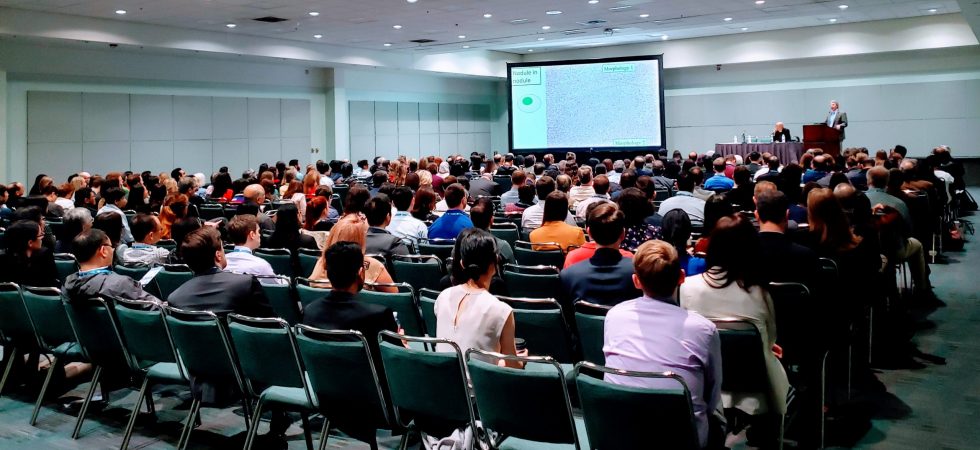
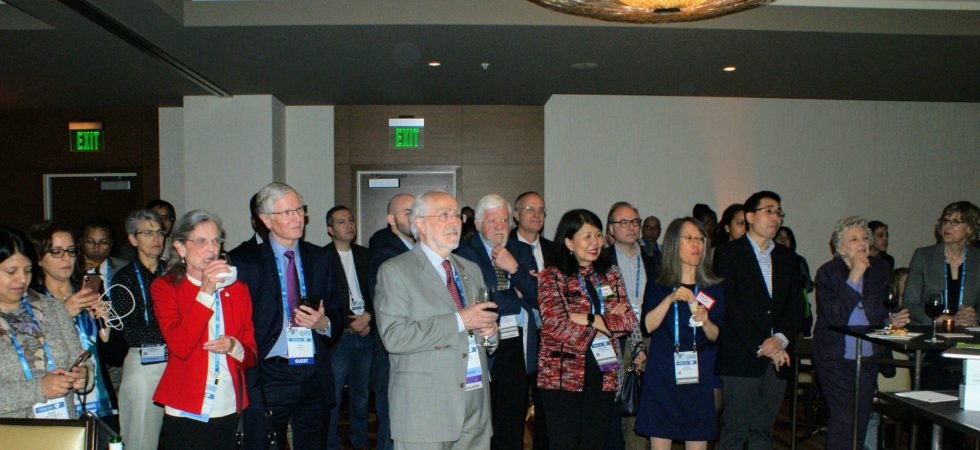
     Greetings! I am pleased to be able to serve you as the president of the Hans Popper Hepatopathology Society (HPHS) for 2010 and 2011. For those of you who are new to the society or if you are browsing our website and reading this, our mission is to disseminate and increase knowledge about the normal and diseased liver and biliary tree. We accomplish this primarily through our annual meeting, held as one of the Companion Meetings to the US and Canadian Academy of Pathology (USCAP). In 2010, we had a very successful meeting, with a standing-room only crowd gathered in our hall at the Marriott Wardman Park Hotel in Washington D.C. At that time we heard updates on important topics in hepatic pathology. Handouts from the meeting and other previous meetings can be found on the USCAP’s website (www.uscap.org). In our business meeting, we updated our bylaws and welcomed 12 new members to the society. They are:

Rashmi Agni, MD, University of Wisconsin-Madison
Cynthia Behling, MD, Sharp Memorial Hospital
Diana M. Cardona, MD, Duke University Medical Center
Michael Cruise, MD, University of Virginia
Sandra Elisabeth Fischer, MD, University of Toronto
Ryan Michael Gill, MD, University of California, San Francisco
Delladetsima Johanna Kassianie, MD, University of Athens
Shannon Jones McCall, Duke University Medical Center
Ilke Nalbantoglu, MD, Emory University
Peter Pernicone, MD, Florida Hospital Medical Center
Christine Sempoux, MD, Cliniques Universitaires Saint-Luc
Stephen C. Ward, MD, Mount Sinai School of Medicine

I would like to take a few sentences (ok, more than a few) to plug participation in clinical research. The most rewarding projects I have been involved in, both personally and professionally, are prospective clinical trials. Most pathology studies published in pathology journals are cross-sectional and retrospective in nature. These are important studies that explore new diagnostic tools, establish new diagnoses or classifications and investigate biology. In a sense, this is the nature of pathology, in that obtaining a tissue specimen is often the end result of a clinical investigation. In contrast, prospective clinical trials and natural history studies offer opportunities to study longitudinal changes and outcomes. More often than not, the pathologist is only involved at the end of such a study, when the clinical investigator arrives with a list of cases to evaluate “per protocol”. I think it is critically important that pathologists participate in clinical research from the idea stage through to the last specimen collection and the data analysis. Early participation means that the pathologist can help decide how best to collect and evaluate the tissues systematically, what ancillary analyses can be added and, most importantly, participate in the analysis of the pathology data in the context of the larger study. My greatest fear is that pathologists become glorified tissue technicians instead of being the expert medical consultants that we are. To me, the best way to avoid this fate is to be involved in the whole process of clinical research. Learn about the clinical trials at your institution. Most will have pathology-based entry criteria (at the very least a diagnostic biopsy). Are there pathology questions that can be addressed, perhaps dovetailing with your own laboratory investigations? Ancillary studies that make the most of your expertise can be excellent collaborative starting points. Once you have gained the confidence of the investigators, ask to participate in the protocol planning process, which, for a small investment of time and energy, can provide you with even greater opportunities for pathology-based investigation. Most importantly, prospective pathology investigations that are conducted alongside clinical studies provide the best way to make powerful statements about the therapeutic and prognostic implications of pathology findings.

This topic leads me to my next plug. Our 2011 meeting will be held at the Henry B. Gonzalez Convention Center in San Antonio, TX on February 27th, 2011. The topic will be “Evidence-Based Biopsy Practice” and will focus on making the most effective use of the liver biopsy in clinical medicine. Although the liver biopsy remains a critical diagnostic tool in many clinical situations, new therapeutics are reducing the need for liver biopsy in some areas and new non-invasive tests are proposed as replacements in other areas. At the same time, our ability to interpret changes in the liver on biopsy has never been greater and new molecular and immunohistochemical tools will allow us to have a greater impact on diagnosis and prognosis. Our four outstanding speakers are Dr. Zachary Goodman, Dr. Joel Lavine, Dr. Emma Furth and Dr. Elizabeth Brunt, who will address us on topics of chronic liver disease, the liver biopsy in pediatric practice, transplantation and the liver biopsy for “cirrhosis”. I am sure that this will be one of the best programs we have ever put together, and I hope that many of you will be able to attend. I thank all of the members for their support of our society. The dues that you pay to be part of the HPHS help to support non-member guest speakers at our annual meeting and our annual prize for best USCAP abstract by a pathologist-in-training. There are also ways to participate in the society through our Membership, Education and Newsletter/Publication Committees. If you are not currently a member, but would like to join, applications are available from Dr. Elizabeth Brunt , our Secretary-Treasurer, who may be reached at the email address below. International members are not assessed membership dues.

Your servant,

David E. Kleiner, M.D., Ph.D.
President, Hans Popper Hepatopathology Society


David E. Kleiner, M.D.,Ph.D.
President
Hans Popper Hepatopathology Society 


Matthew M. Yeh, MD PhD
Vice President
Hans Popper Hepatopathology Society 
 Elizabeth M. Brunt, MD
Elizabeth M. Brunt, MD
Secretary-Treasurer
Hans Popper Hepatopathology Society
M. Kay Washington, MD PhD
Past President
Hans Popper Hepatopathology Society


image
image